1. What is the current global market outlook for the Off-Grid EV Charging Market?
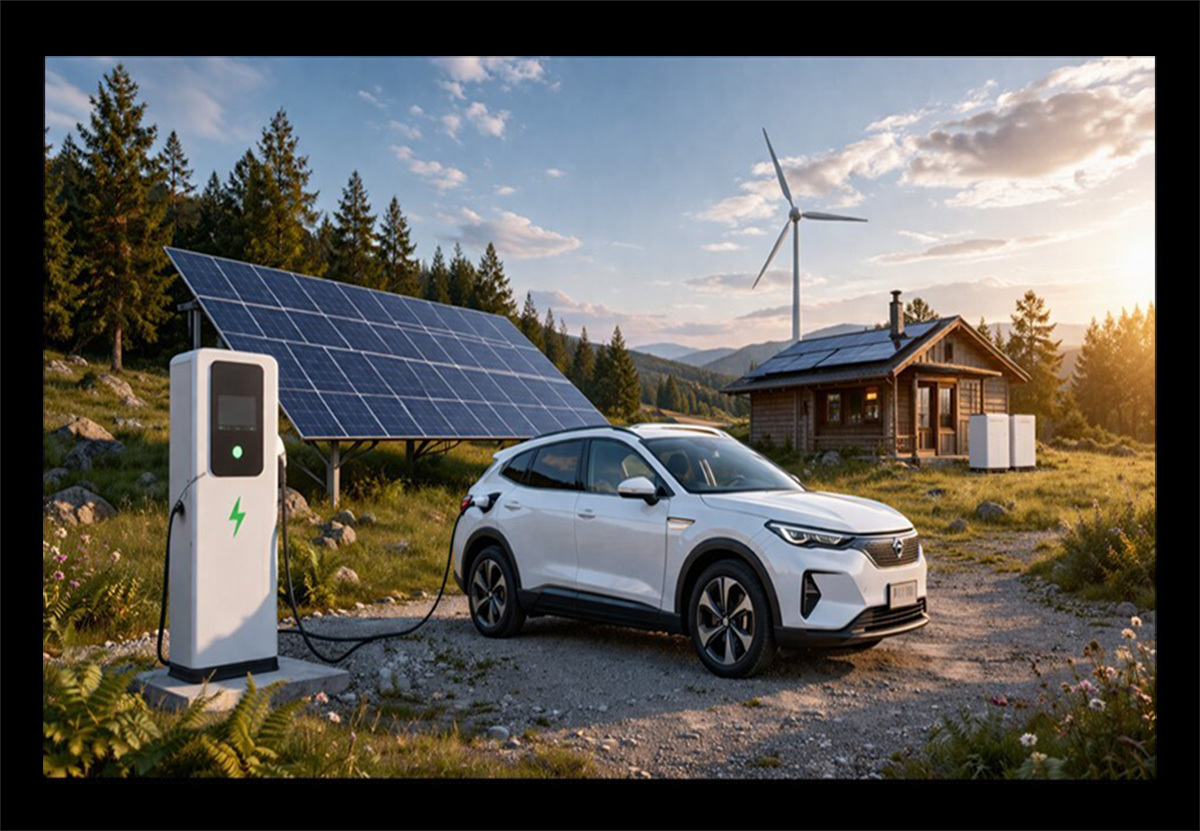
The global off-grid EV charging market is expected to witness strong growth through 2035, driven by rising EV adoption, increasing demand for charging in remote and grid-constrained areas, and the growing integration of renewable energy. Advancements in solar PV, battery energy storage systems (BESS), and decentralized energy solutions are enabling scalable deployment across diverse geographies.
2. How has the off-grid EV charging ecosystem evolved over time?
The ecosystem has evolved from small-scale pilot projects to early commercial deployments, with energy companies, EV charging providers, and technology firms forming strategic partnerships. Market players are focusing on integrated solutions combining renewable energy, battery storage, and smart energy management systems, along with modular and mobile charging units to improve scalability and flexibility.
3. Why is off-grid EV charging important, and what are its key benefits?
Off-grid EV charging is crucial for expanding EV infrastructure beyond traditional grid networks. It provides energy access in remote areas, enhances energy resilience, reduces dependence on fossil fuels, and supports renewable energy utilization. It also enables flexible deployment in highways, rural areas, and emergency situations while lowering long-term operational costs.
4. What is the future market outlook for off-grid EV charging?
The market is projected to grow significantly, supported by declining renewable energy costs, advancements in battery technologies, and increasing adoption of innovative business models such as charging-as-a-service (CaaS) and microgrids. Growing focus on sustainability and energy independence will further accelerate adoption globally.
5. Which regions are leading the off-grid EV charging market?
Asia-Pacific leads the market due to rapid EV adoption and rural electrification initiatives. Europe follows with strong emphasis on sustainability and renewable integration, while North America is witnessing growth driven by investments in resilient infrastructure. Emerging regions such as the Middle East, Africa, and Latin America are also gaining traction.
6. Why is Asia-Pacific dominating the off-grid EV charging ecosystem?
Asia-Pacific dominates due to high EV adoption, strong government incentives, and increasing demand for electrification in rural and underserved regions. Countries such as China and India are investing heavily in renewable energy and decentralized charging infrastructure, supported by favorable policies and large-scale deployment initiatives.
7. What are the major applications and end-use segments?
Major applications include highways, remote and rural areas, commercial fleets, mining sites, and emergency or disaster response zones. Key end-users include logistics companies, mobility service providers, government agencies, and infrastructure developers.
8. What opportunities and challenges exist in the market?
Opportunities include expansion in emerging markets, adoption of innovative business models, and advancements in renewable energy technologies. Challenges include high initial CAPEX, battery storage costs, regulatory uncertainties, and operational complexities in remote environments.
9. How does PESTEL analysis impact the off-grid EV charging market?
PESTEL factors such as supportive government policies, economic incentives, technological advancements, environmental concerns, and regulatory frameworks play a critical role in shaping market growth and adoption.
10. What are the key policies and incentives supporting the market globally?
Governments are promoting off-grid EV charging through subsidies, tax benefits, renewable energy incentives, and infrastructure funding. These policies aim to support electrification in remote areas and reduce dependence on traditional grid systems.

 Indian Snacks Market 1 × $350.00