Off-highway Electric Vehicle Market
$350.00
Market Outlook
The report forecasts robust OHEV market growth at a CAGR exceeding 25% through 2030, propelled by falling battery prices, infrastructure investments, and fleet electrification targets in mining and construction.
Major Off-Highway Electric Vehicle Market Leaders by Regions
It identifies regional leaders: Caterpillar and John Deere in North America; Volvo CE and SANY in Europe and Asia-Pacific; and Komatsu with XCMG spearheading in Asia, supported by localized production hubs.
Regional Analysis
Regional dynamics reveal Asia-Pacific’s manufacturing dominance and rapid adoption, North America’s policy-driven mining shift, and Europe’s regulatory push via EU Green Deal incentives, with investment flows exceeding $10 billion annually.
Segmentation
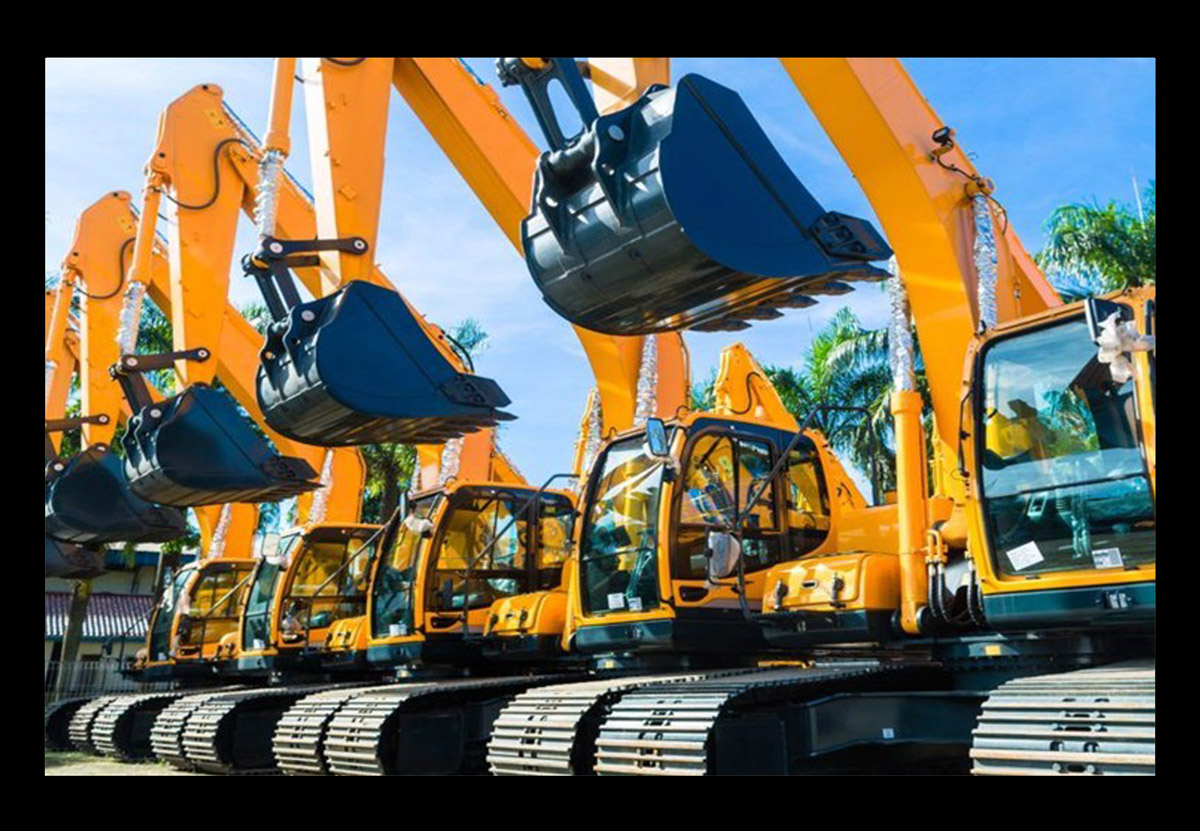
Market segmentation covers vehicle types (excavators, loaders, dozers, tractors), power ratings (under 100 kW to over 500 kW), battery chemistries (lithium-ion, solid-state), and autonomy levels, evaluating share and growth potential.
Key Applications & End-Use Segments
Key applications span mining (haul trucks), construction (wheel loaders), agriculture (electric tractors), and warehousing (forklifts), with end-use segments prioritizing high-utilization fleets for fastest ROI.
Recent Developments
Recent highlights include Caterpillar’s 766 RM electric haul truck launch, Volvo CE’s battery-swappable excavators, and partnerships like Komatsu-DeNA for autonomous OHEVs, alongside pilot deployments in Australian mines.
Drivers and Trends
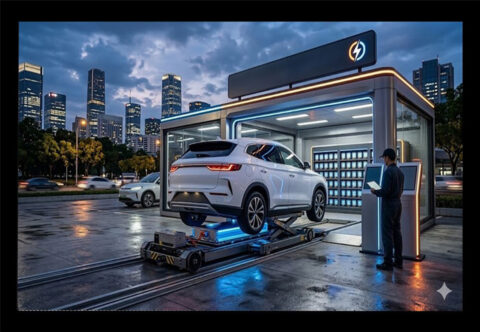
Primary drivers encompass tightening ESG regulations, battery cost declines (to under $100/kWh), and quick-charging infrastructure; trends feature V2G integration, AI-optimized energy management, and hybrid-electric bridges to full BEVs.
Challenges and Opportunities
Challenges like high upfront costs, limited battery lifespan in harsh conditions, and charging infrastructure gaps are balanced by opportunities in modular designs, government subsidies, and aftermarket retrofits for legacy fleets.
PESTEL Analysis, SWOT Analysis
The report conducts a PESTEL analysis of political incentives, economic viability, and technological enablers, paired with SWOT insights on OHEV strengths (efficiency gains) versus threats (supply chain bottlenecks), guiding strategic decisions.
- Off-highway Electric Vehicle Market
- Key Takeaways
Wireless EV Charging Technologies Market Outlook
- Off-highways Electric Vehicle Market | Evolution of Off-highway Electric Vehicle Players
- Off-highways Electric Vehicle Market | Importance and Benefits
- Off-highways Electric Vehicle Market | Major Players
- Off-highways Electric Vehicle Market | Market Outlook
- Off-highways Electric Vehicle Market | Major Off Highway Electric Vehicle Market Leaders by Regions
- Off-highways Electric Vehicle Market | Regional Analysis
- Off-highways Electric Vehicle Market | Segmentation
- Off-highways Electric Vehicle Market | Key Applications & End-Use Segments
- Off-highways Electric Vehicle Market | Recent Development
- Off-highways Electric Vehicle Market | Drivers and Trends
- Off-highways Electric Vehicle Market | Opportunities and Challenges
- Off-highways Electric Vehicle Market | SWOT Analysis
- Off-highways Electric Vehicle Market | PESTEL Analysis
Key Takeaways
1. What is the current global market outlook for off-highway electric vehicles (OHEVs)?
The global OHEV market is surging with a projected CAGR of over 25% through 2030, fueled by decarbonization mandates in mining and construction, plummeting battery costs, and fleet operators targeting net-zero goals. OHEVs are transitioning rugged sectors from diesel dominance to electrified operations.
2. What are the main components of an off-highway electric vehicle?
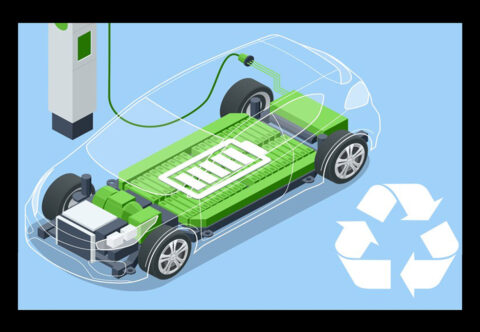
Key components include high-voltage battery packs (often 300-800 kWh for heavy-duty use), electric drivetrains with axial-flux motors, power electronics for torque vectoring, regenerative braking systems adapted for off-road loads, and robust thermal management for extreme environments.
3. Why are off-highway electric vehicles important, and what are their key benefits?
OHEVs are vital for slashing site emissions, noise, and fuel costs in industries like mining and agriculture—offering up to 50% lower operating expenses, instant torque for productivity, and compliance with ESG regulations—while enabling zero-emission zones without grid dependency.
4. Who are the major players in the off-highway electric vehicle market?
Dominant players include Caterpillar (electric excavators), Volvo Construction Equipment (battery loaders), Komatsu (autonomous haul trucks), John Deere (agricultural tractors), and CNH Industrial, alongside retrofit specialists like SEA Electric pushing modular solutions.
5. Which companies lead the off-highway electric vehicle market by region?
North America sees Caterpillar and John Deere leading; Europe features Volvo CE and JCB; Asia-Pacific is driven by Komatsu, SANY, and XCMG, leveraging local manufacturing and policy support for rapid scaling.
6. What does the regional analysis reveal about OHEV adoption?
Asia-Pacific dominates production and growth due to mining investments; North America excels in pilot projects for large-scale fleets; Europe advances via strict emissions rules like the EU Green Deal, with annual investments topping $10 billion globally.
7. How is the off-highway electric vehicle market segmented?
Segmentation spans vehicle types (excavators, loaders, dozers), power classes (50-500+ kW), battery types (lithium-ion, emerging solid-state), and sectors (construction 45% share, mining 30%), with construction gaining fastest traction.
8. What are the key applications and end-use segments for OHEVs?
Primary applications include mining haul trucks, construction wheel loaders, agricultural electric tractors, and warehousing forklifts; end-use focuses on high-duty-cycle fleets where electrification yields quickest ROI through energy savings.
9. What recent developments are shaping the off-highway electric vehicle landscape?
Notable advances feature Caterpillar’s 2025 RM-series electric trucks, Volvo’s swappable-battery excavators, Komatsu’s AI-autonomous prototypes, and partnerships like Rio Tinto-Boliden for mine deployments, accelerating commercialization.
10. What are the main drivers, trends, challenges, opportunities, and analyses for OHEVs?
Drivers include ESG pressures and subsidies; trends cover megawatt charging and V2G; challenges involve battery durability and infrastructure; opportunities lie in retrofits; PESTEL highlights policy boosts, while SWOT emphasizes efficiency strengths over supply chain threats.