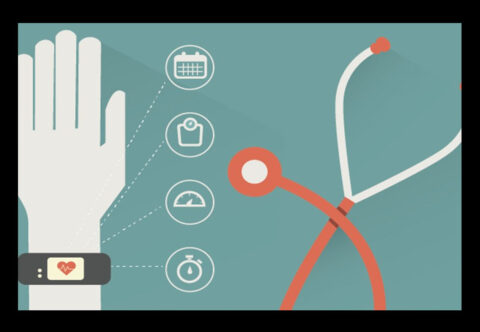
Global Remote Patient Monitoring Market Outlook
$350.00
The Global Remote Patient Monitoring (RPM) market outlook provides a structured view of market size, growth trajectory, competitive landscape, and key players, supported by prevalence-driven demand, device adoption trends, and regional insights including India. It also highlights regulatory pathways (FDA (Food and Drug Administration), CDSCO (Central Drugs Standard Control Organization)) and reimbursement frameworks impacting commercialization.
The report covers market sizing, key statistics, leading companies, and ecosystem mapping across device manufacturers, platform providers, and healthcare systems. It evaluates technology trends (AI/ML (Artificial Intelligence/Machine Learning), IoT (Internet of Things)), value chain structure, clinical applications, and competitive intensity through Porter’s Five Forces analysis.
Market dynamics outline core drivers, opportunities, and challenges across adoption, pricing, compliance, and supply chain constraints. Strategic insights define investment priorities, innovation focus, and future positioning within the global RPM market.
Global Remote Patient Monitoring Market Outlook
- Remote Patient Monitoring | Introduction
- Remote Patient Monitoring | Market Size
- Remote Patient Monitoring | Top Players
- Remote Patient Monitoring | Statistics | Global
- Remote Patient Monitoring | Statistics | India
- Remote Patient Monitoring | Value Chain Analysis
- Remote Patient Monitoring | Technological Advancements
- Remote Patient Monitoring | Porter’s Five Forces Analysis
- Remote Patient Monitoring | Regulatory Framework
- Remote Patient Monitoring | Key Clinical Application Areas
- Remote Patient Monitoring | Drivers
- Remote Patient Monitoring | Opportunities
- Remote Patient Monitoring | Challenges
Key Takeaways
- Path Forward
1. What is the projected growth of the global remote patient monitoring market?
The market is expected to expand steadily through 2026-2035 at an estimated 16.2% CAGR, supported by rising prevalence of chronic diseases, increasing demand for decentralized and value-based healthcare, expanding aging populations requiring continuous monitoring, and growing adoption of connected wearable devices, AI-enabled analytics, and telehealth-integrated care platforms.
2. What are the main types of remote patient monitoring covered in the market?
Core categories include wearable monitoring devices, implantable cardiac monitoring systems, continuous glucose monitoring (CGM) systems, blood pressure & pulse oximetry monitors, multi-parameter biosensor platforms and mobile health and telehealth applications, among others.
3. Which core technologies are shaping next-generation remote patient monitoring performance?
Key technologies include edge artificial intelligence-enabled monitoring, multi-modal biosensor integration, AI-driven anomaly detection, predictive oncology monitoring frameworks and non-invasive wearable biosensors.
4. Who are the primary end users of remote patient monitoring?
End users include hospitals and health systems, ambulatory surgical centers (ASCs), home healthcare settings, long-term care facilities, virtual care & hospital-at-home providers, and specialty chronic care clinics, among others.
5. What are the major drivers influencing remote patient monitoring market expansion?
Primary drivers include expansion of reimbursement pathways, growth of hospital-at-home care delivery, adoption of AI-enabled monitoring platforms, deployment of cellular-connected monitoring ecosystems, and healthcare workforce capacity constraints.
6. What opportunities are emerging in the remote patient monitoring space?
High-growth opportunities include AI-enabled predictive monitoring, chronic disease management expansion, hospital-at-home & decentralized care delivery and advanced biosensor & wearable device ecosystem.
7. What challenges limit remote patient monitoring adoption and scale?
Key constraints include data interoperability & integration complexity, clinical data overload & workflow fatigue, cybersecurity & data privacy risk, reimbursement inconsistency & return on investment uncertainty and patient adherence and engagement limitations.
8. Which players currently dominate the Remote Patient Monitoring market?
Key participants operating in the global remote patient monitoring ecosystem include Koninklijke Philips N.V., GE HealthCare, Medtronic, Abbott, Dexcom, Inc, Masimo, BioIntelliSense, Inc., ResMed, Honeywell International Inc., Boston Scientific Corporation, OMRON Corporation and Biotronik.
9. How intense is competition within the Remote Patient Monitoring market?
Competition is high due to fragmentation across device and platform players, with commoditized hardware driving price pressure and software/AI layers enabling differentiation. Strong buyer power and rapid innovation cycles further intensify rivalry and reduce vendor stickiness.
10. How will Remote Patient Monitoring influence future healthcare delivery models?
Remote Patient Monitoring enables a shift to decentralized, home-based care supported by real-time data, reducing hospital dependency and enabling continuous monitoring. It underpins value-based, predictive, and hybrid care models through integration with digital health ecosystems.