
Global Biosurfactants Market Outlook

Global Biosurfactants Market Outlook - Kaleido Koncepts

Global Biosurfactants Market Outlook

Spotlight

$350.00

Access Brochure

The Global Biosurfactants Market Outlook presents a comprehensive assessment of the evolving biosurfactants landscape, covering market outlook, applications, functional properties, and competitive advantages over conventional chemical surfactants. The report examines how microbially derived biosurfactants are reshaping multiple end-use industries, including home and personal care, agriculture, food processing, oilfield chemicals, and environmental remediation.

It provides a detailed evaluation of the biosurfactants value chain, spanning feedstock sourcing, microbial fermentation, downstream processing, and commercialization, while assessing cost structures, scalability constraints, and emerging business models. Regional dynamics across Asia-Pacific, North America, Europe, Latin America, and the Middle East & Africa are analysed to highlight demand patterns, production hubs, and policy-driven adoption trends.

The report further reviews the global regulatory framework governing biosurfactants, including sustainability mandates, biodegradability standards, and evolving chemical regulations that are accelerating substitution away from petrochemical surfactants. In parallel, it explores technological advancements that are improving yield economics and broadening application scope.

Finally, the study synthesizes key market dynamics: drivers, constraints, and inflection points, shaping long-term growth, and concludes with key takeaways and a forward-looking path, outlining how innovation, regulatory alignment, and scale-up capabilities will define the next phase of the global biosurfactants market., and sustainability will shape the future of the global biosurfactants market.
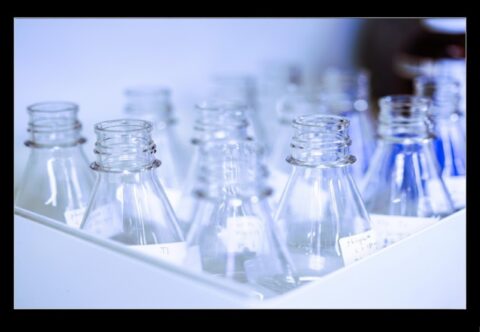

Global Biosurfactants Market Outlook

  • Biosurfactants | Introduction
  • Biosurfactants | Market Outlook
  • Biosurfactants | Regional Outlook
  • Biosurfactants | Applications
  • Biosurfactants | Properties
  • Biosurfactants | Advantages
  • Biosurfactants | Value Chain
  • Biosurfactants | Regulatory Framework
  • Biosurfactants | Technological Advancements
  • Biosurfactants | Market Dynamics 

Key Takeaways

  • Path Forward

1. What are biosurfactants and how are they different from bio-based surfactants?
Biosurfactants are 100% bio-based surfactants produced biologically, typically through microbial fermentation using bacteria, yeasts, or fungi. In contrast, bio-based surfactants may be only partially renewable and can still involve chemical synthesis and fossil-based inputs.

2. What is the global biosurfactants market size and growth outlook?
The global biosurfactants market is valued at ~USD 3.47 billion in 2025 and is projected to reach ~USD 6.25 billion by 2035, growing at a CAGR of approximately 5.6% over the forecast period.

3. Why are biosurfactants considered more sustainable than conventional surfactants?
Biosurfactants are biodegradable, have a low environmental footprint, and generally require lower energy for production compared with petrochemical surfactants, making them a preferred solution under tightening sustainability regulations.

4. What performance advantages do biosurfactants offer?
Biosurfactants are often multifunctional, delivering superior performance in detergency, wetting, emulsification, and dispersion, and can outperform traditional and some bio-based surfactants in efficiency and versatility.

5. Which regions lead the global biosurfactants market?

  • North America (~35%) leads due to strong environmental regulations, early industrial adoption, and advanced fermentation infrastructure.
  • Europe (~30%) follows, supported by strict EU regulations (REACH, Green Deal) and high penetration in personal care and detergents.

6. How is Asia-Pacific positioned in the biosurfactants market?
Asia-Pacific accounts for ~20% of the market, driven by rapid industrialization, a cost-competitive manufacturing base, and rising adoption in agriculture, home care, and environmental applications.

7. What is the market status in Latin America and the Middle East & Africa?

  • Latin America (~4%) shows growing demand from agriculture and soil remediation, though commercialization remains slower.
  • Middle East & Africa (~11%) demand is primarily driven by oil & gas (EOR, remediation) and water treatment, with limited local production capacity.

8. Who are the major global players in the biosurfactants ecosystem?
Key players include BASF, Croda, Evonik, Givaudan, Henkel, Solvay, Clariant, Kaneka, Kemin, Jeneil Biotech, Allied Carbon Solutions, Stepan, Nouryon, Saraya, Holiferm, and several specialized biotech firms and research institutes.

9. What role does regulation play in driving biosurfactant adoption?
Stringent environmental and chemical regulations such as EPA mandates in North America and REACH and Green Deal policies in Europe are accelerating the replacement of petro-surfactants with biosurfactants across end-use industries.

10. What is the key takeaway for the global biosurfactants market?
While all biosurfactants are bio-based surfactants, not all bio-based surfactants qualify as biosurfactants. Biosurfactants represent the most sustainable and high-performance segment, positioning them as a critical growth pillar within the global surfactants industry.